
In the previous post, I gave examples of what I’m calling “the Doctrine of Insect Rearing from a Rationale Perspective.” I said that I would use as an example of rationale the highly influential work of Dr. Robert Yamamoto where his 1969 paper on a diet and rearing system context for that diet has resulted in thousands of publications and countless insects that were produced from the Yamamoto diet and methods. Here is the diet:
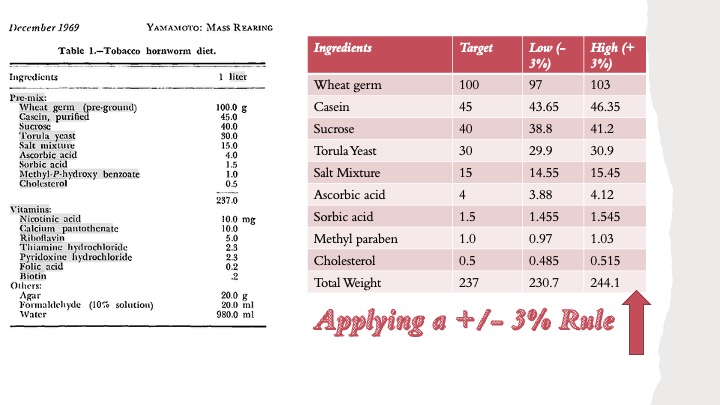
Figure 1 Formulation of Yamamoto 1969 Diet for Manduca sexta.
The Yamamoto 1969 diet formulation; and these are neonates and late 5th instar Manduca sexta on the Yamamoto diet:
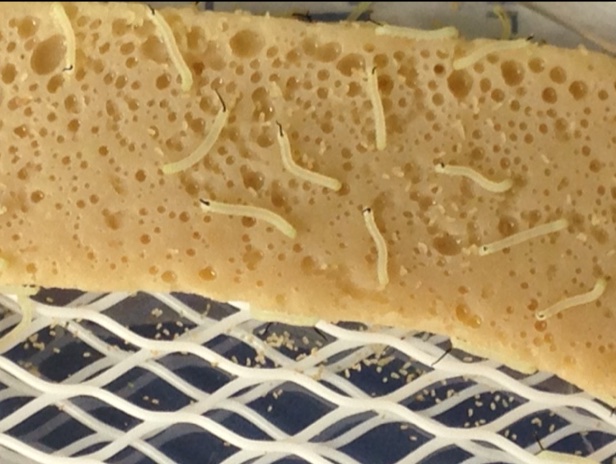
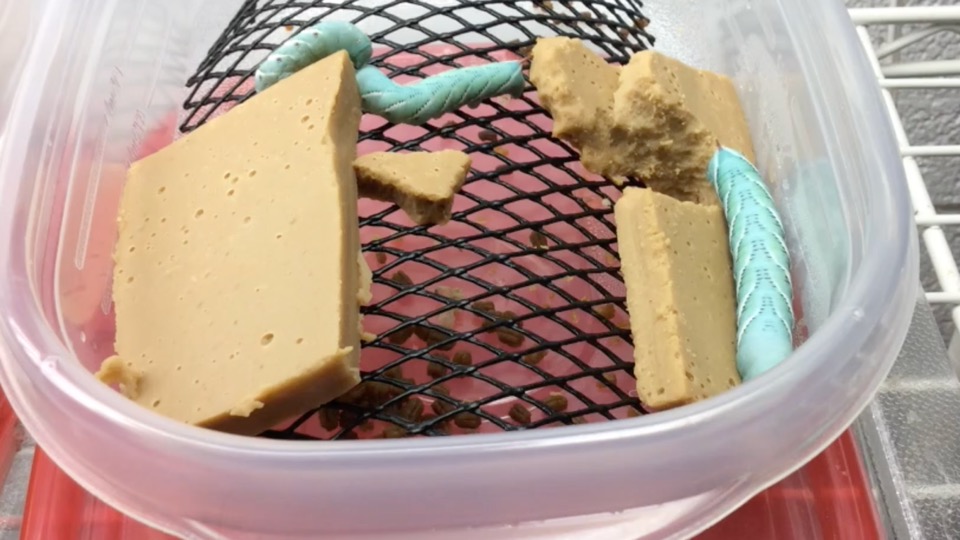
Figures 2a (neonate M. sexta larvae) and 2b (5th instar M. sexta larvae) feeding on the Yamamoto Diet.
LACK OF RATIONALE FOR THE YAMAMOTO DIET COMPONENTS: The diet formulation in Figure 1 is a wheat germ based diet ultimately derived from Adkisson et al. 1960 Diet and the Vanderzant et al. 1959 Diet that was the forebear of the Adkisson Diet. While the Yamamoto Diet must be considered a colossal success, the paper describing it does not provide rationale for the various components. This makes the Yamamoto 1969 paper a good example of a paper that tells WHAT to do to make a successful hornworm diet but not WHY or HOW the components succeed as they do. We see the same shortcoming in the diets derived from Vanderzant where use of wheat germ sparked a revolution in rearing Lepidoptera and then countless other insects. It was about seven years before the great Dr. Erma Vanderzant returned to the question of “why is wheat germ such a great ingredient?” when we began to understand the “hidden” or “cryptic” rationale for using wheat germ.
A LITTLE WHEAT GERM RATIONALE: On a first level of rationale, we can say that wheat germ is very nutritious and very palatable (yummy). But this is superficial, and we are well-served to go deeper into the layers of rationale. GOING A LITTLE DEEPER: Wherever wheat germ is used in an insect diet it provides these (and many more features): 1) high protein content (nearly 20% on a dry weight basis); 2) all the essential amino acids; 3) phytosterols that meet the need of insects for a sterol nucleus in their food; 4) rich in polyunsaturated fatty acids (including lots of omega 3’s); 5) lots of B vitamins; 6) lots of tocopherol (vitamin E); 7) all essential minerals in fairly generous amounts; 8) fiber, including beta-glucans which help promote gut mobility; 9) various cryptic (or un-identified) sensory stimuli (chemosensory and textural stimuli).
I will take a break here, but in the next discussion I will take us through a still deeper look at wheat germ and the other major components of the Yamamoto Diet using an AI technique known as neural networking. I will do a little “dissection” of an experiment that I did recently with the major components shown here.
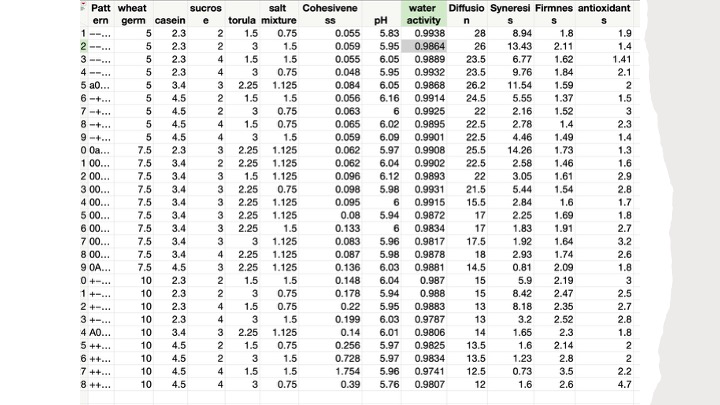
This data table reports the results of an experiment that I generated using JMP statistics’ Design of Experiments. SEE YOU IN THE NEXT POST!