
In May of 2026, Allen Carson Cohen will be teaching an online insect rearing fundamentals course. The course is 24 hours of instruction via Zoom with lots of interaction between participants (students) and Professor Cohen. We have updated this course to include new information about rearing systems, their standard operating procedures, using statistically-based optimization, engineering of the rearing systems, and up-to-date technology for measuring quality and process control. While getting into new approaches, the course also contains standard information that has been covered conventionally in these courses and in Professor Cohen’s books and recent papers.
Here is an example from Allen Cohen’s recent research on interactions of components in diets, using a JMP statistical system’s format for diet texture using the 1969 Yamamoto Diet for tobacco hornworms (Manduca sexta).
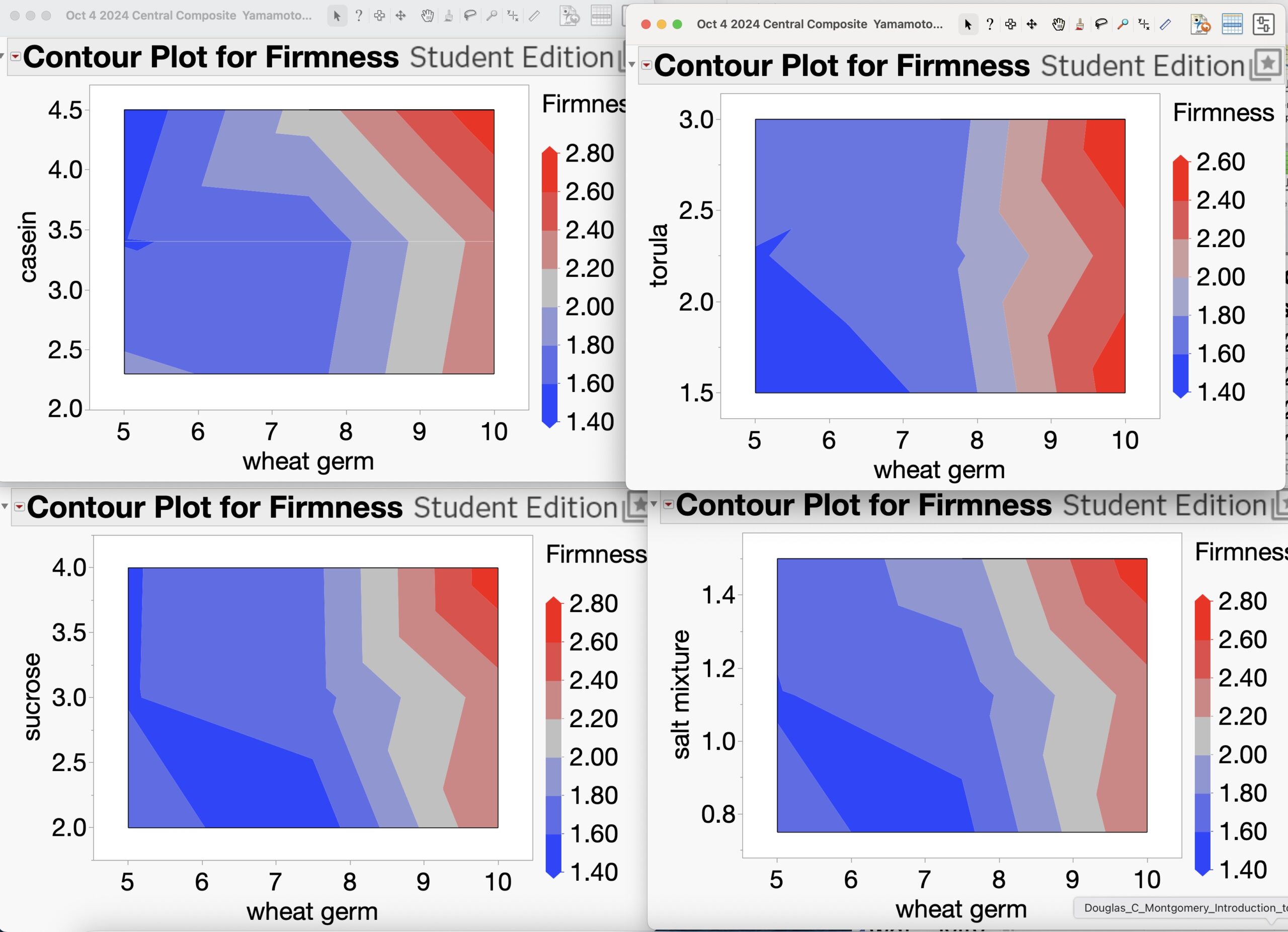
In this figure, we can see an example of the kinds of exploration we can do with a design of experiments (DoE)-based inquiry. In the experiment illustrated here, we were asking the question: how do components of the Yamamoto (wheat germ and yeast) diet interact to give the diet varying degrees of gel firmness. This type of approach allows us to understand not just WHAT works in our diets, but more importantly HOW or WHY it works (or fails to work).
In this class and in all Professor Cohen’s classes, we strive to learn the mechanisms, rationale, and basic science behind our rearing systems’ components. We strive to learn HOW and WHY things work as they do in terms of the biology of the insects in our systems, the physical and chemical nature of the interactions of rearing systems’ components, and in knowing the HOWs and WHYs, we are better able to engineer our systems and generate standard operating procedures (SOPs) that are data-based and well-vetted.
If this approach sounds interesting to you, please see the next Blog Page for details on course contents and registration details for the May 2026 class.